Sunday, December 20, 2009

My Old, Familiar Friend

When I first started listening to the Raconteurs, I never paid much attention to Brendan Benson; my focus was generally on Jack White. My first impression of Benson was that he was White's new partner in crime who had a similar singing voice and who could write decent songs, but I wasn't really blown away by his presence.

Now, after listening to Benson's fourth album, My Old, Familiar Friend, it's hard not to look back at the duo of White and Benson and see some slight Lennon-McCartney resemblance. White, both in the Raconteurs and even more so in the White Stripes, is the rocker that plays the more raw rock and blues flavors; many of the songs have rougher edges and unconventional lyrics. Benson, on the other hand, leans on the poppy side, writing more melodic, accessible music. That's not to say he can't rock out with White, just listen to Raconteurs songs like "Hands," "Attention," and "Many Shades of Black."

Still, as soon as the first track, "A Whole Lot Better," kicks in, it's easy to imagine it on a McCartney album. The same goes with most of the songs. "Gonowhere," with it's keyboard opening, sounds like classic Wings. "Garbage Day," "You Make a Fool Out of Me," "Eyes on the Horizon," and "Feel Like Taking You Home," all sound like cuts off of McCartney's more recent albums, and the same can be said for most of the record. The whole album has a very clean, poppy production, and while Benson does rock out on songs like "Borrow" and "Misery," the songs never lose their catchiness.

There isn't quite the variety of sounds that can be found in Benson's work in the Raconteurs. With the albums Broken Boy Soldier and Consolers of the Lonely, Benson's songs ranged from the rocking "Hands" and "Attention" to the country-tinged "Old Enough" and the western-influenced "The Switch and the Spur." My Old, Familiar Friend doesn't have that range or variety. That's not to say all the songs sound the same; each song has its own identity and the album never sounds repetitive. However, all the songs have the same pop quality to them, like Benson wanted to distance himself from his Raconteurs image and make a straight pop record unlike that of his work with Jack White. He certainly has succeeded in that respect; the Raconteurs this is not. Benson manages to carve out his own identity and sound independent of his ties to White, even if that identity sounds an awful lot like an ex-Beatle.

But that's what I love about this album--the poppy sound. All the songs have been stuck in my head much more than anything by the Raconteurs, who make pretty catchy songs themselves. It may sound a little too much like extra McCartney songs, but I love McCartney, and since he didn't release a studio album this year, I take what I can get, and when he can't make it, Brendan Benson is there with the tunes. The title My Old, Familiar Friend is fitting beyond the fact that it's one of the lyrics. This all sounds familiar, like the old friend we all know as Paul McCartney. Does this mean that Brendan Benson is the new McCartney, or that the Raconteurs are the new Beatles? Of course not. Still, they're doing a damn good job.

Wednesday, December 9, 2009

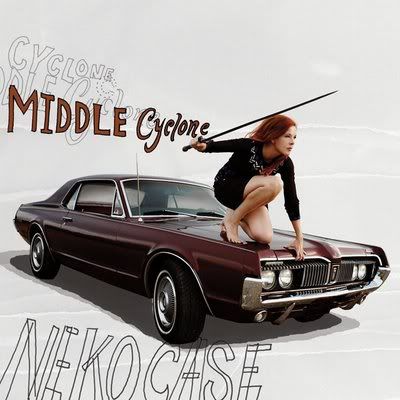
Middle Cyclone

Middle Cyclone Pictures, Images and Photos
Alright, I'm very much behind on this whole thing, for which I'm ashamed of myself, so I'm going to make this somewhat brief and move on to the next album pick, which I'm also behind on.

Neko Case and her new album Middle Cyclone are a breath of fresh air. In the world of country music today, Nashville is dominated by the mainstream pop-country of people like Carrie Underwood, Taylor Swift, and the other bombshells of the scene, just as it was ten years ago with Faith Hill and Shania Twain. Maybe that's a generalization, but either way, Neko Case has a much different sound. Honestly, if it weren't for her voice, it would be tough for me to label Middle Cyclone as country, even alt-country. The record transcends any one genre and plays to different tastes, but it's all tied together by Case's voice, which sounds like the reincarnations of Patsy Cline and Wanda Jackson.

That very voice ranges throughout the album from strong and independent to soft and whispering, but it is always beautiful, both aesthetically and just as a different sound among the usual stuff that is made these days. With songs about Mother Nature, prison girls, the usual relationship troubles, and her own inadequacies, Neko takes the usual subject matter (the relationship troubles, not the prison girls obviously) and makes them sound fresh. Again, this has mostly to do with her singing, which is the biggest country element of this alt-country album.

Instrumentally, much of the music strays from the usual modern sounds of walls of guitar overdrive, steel pedal crying, and the general overproduction that is prevalent in today's mainstream country. Some songs are soft, with only an acoustic guitar and piano, like "Vengeance is Sleeping," and the title track, which features a music box playing alongside the acoustic guitar for an added innocence, while others are more poppy, basic guitar-drum-bass combos like "This Tornado Loves You" and "People Got a Lotta Nerve." "Prison Girls" takes a dreamy, trippy turn that, even with Neko's voice, isn't really deserving of being labeled as "country" but it is nonetheless a great track to get lost in. Everything fits in this album, every instrument is in the right place; gentle plucks of string sections here and there, the above-mentioned music box, the overdubs of Case's voice on "Never Turn Your Back on Mother Nature," etc.

What else can I say about this album, other than it's a great listen? It's tough for me to think of much more to say, I've just had trouble coming up with anything. I know that sounds like lazy writing (it is), but sometimes that's all you can say about a great album. You don't always know exactly why you like it, but it connects with you somehow and you just enjoy it. It's the same way with books and movies; you can't always explain what makes you feel good inside. Whatever it is, I hope Neko Case continues making music like this; God knows we need it these days.

Sunday, November 29, 2009

Them Crooked Vultures

Since we're in the home stretch of 2009, I figured I would join the multitude of other writers, journalists, bloggers, etc., in creating a best-of end of the year list. Of course, I'm not the biggest fan of the current music scene, so I didn't exactly splurge on all the big releases of the year. In fact, I've only listened to about ten albums released this year (I know, I'm such a music enthusiast). Since the total number of albums is relatively small, I'll only do a Top 5 list, one album a week until the end of December. So, let's kick it off with the most recent release of the Top 5, the eponymous debut album from Them Crooked Vultures.
Them Crooked Vultures Pictures, Images and Photos
Modern supergroups have always been hit or miss for me. There are, of course, the good--Audioslave, the Raconteurs, etc.--and there are the not so good--Velvet Revolver, Chickenfoot, etc. At first, Them Crooked Vultures struck me as a member of the latter group. The first singles I heard, "New Fang" and "Mind Eraser, No Chaser," just didn't sync with me very well at first. Still, though I've never been the world's biggest Josh Homme or David Grohl fan, the prospect of hearing the brilliant and reclusive John Paul Jones of Led Zeppelin on bass was too good for me to give up on them that easily. I'm glad I followed my instinct because I've really come around and now I can't stop listening to it.

The change of heart began to occur mid-way through the first song, "No One Loves Me & Neither Do I," when the band shifts from a laid back groove into a full-on Zeppelin-esque rave that must have made Jones feel right at home. The aformentioned singles have quickly become favorites, especially "New Fang," which has a bouncy rhythm I can't help liking. "Dead End Friends" for some reason strikes me as a lost track from Chinese Democracy, had Axl Rose done it correctly.
The Zeppelin influence goes beyond the presence of John Paul Jones. Grohl, who is probably the best Zeppelin drummer outside the Bonham family, pulls out all the stops and stays tight with Jones, who contributed to two tracks on a 2005's In Your Honor by Grohl's band, Foo Fighters. Jones' bass playing is about what you would expect from him--top-notch and tight with Grohl's drumming. While there aren't really any "Dazed and Confused" bass lines or "Lemon Song" solos, Jones proves that he's still got it forty years later (as if anyone thought he didn't). Adding further to the Zeppelin sound, he plays the occasional keyboard parts on "Scumbag Blues" and "Caligulove," as well as a lovely piano intro on "Spinning in Daffodils."
Homme, meanwhile, does his best Jimmy Page riffage and while he isn't the soloist Page is, he manages to hold his own on tracks like "Elephants" and "Scumbag Blues," in which he sounds like the love child of Jimmy Page and Jack White had they hooked up on the set of "It Might Get Loud." Handling most if not all of the lead vocals, Homme avoids imitating Robert Plant and thus turning it into a Zeppelin tribute by singing in his usual voice, the exception being a good Jack Bruce impression on the Cream-y "Scumbag Blues" and a David Bowie tone in "Gunman" and "Spinning in Daffodils."

I've probably pidgeonholed this album and this band as "Zeppelin-light" (Lite Zeppelin?) and to a certain extent, that's what it is--one Zeppelin member and two guys raised on his music playing similar riffs and rhythms. Many of the songs run the imitative range of bluesy riffs from the early albums to the heavy, funky rhythms of the later work. There's even a hint of the Eastern flavor on the dreamy "Interlude With Ludes" and the seven minute "Warsaw."
Still, the band does something that Chickenfoot and Velvet Revolver don't. In fact, it's the opposite. While those two stuck to the music of the assorted members' usual habits (i.e. hard stadium rock with Chickenfoot and hard post-grunge alternative for Velvet Revolver), TCV rely on their influences while keeping Grohl and Homme's alternative sounds at a low level. Along with the Zeppelin influence, there's also elements of Cream, and Deep Purple, among many of the other late '60s/early '70s classic rock acts.

To describe Them Crooked Vultures, I wish I could say "unique," I don't get to say it enough. I just can't bring myself to say it, though. They rely too heavily on the Zeppelin influence to say that. Instead, I'd say "distinctive." They're different from anyone else I'm hearing out there lately. It doesn't really change my views on modern supergroups (like I said, it's hit or miss, the Vultures being a hit), nor does it give me much more hope for the future (none of the members are exactly new on the scene). Still, it's albums like this that thwart my preconceptions and show me that there is still good work being done out there in the world of rock.

Monday, November 23, 2009

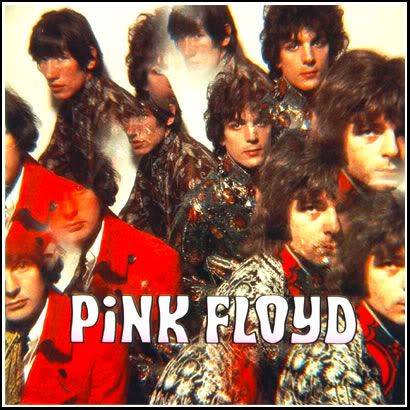
Piper at the Gates of Dawn

piper at the gates of dawn Pictures, Images and Photos

I wish I had been twenty years old in 1967. Among all the trippy splendor of that summer, I can't imagine how amazing it would have been to listen to Pink Floyd's Piper at the Gates of Dawn for the first time. It is always a fun listen, and even amidst the trippiest music of that year, it stood out. It combined drugs, psychedelia, space, and whimsy, and laid the groundwork for the band's future.
This was the innocent Floyd; before they wrote about time and money, political animal metaphors, and bricks in the wall. Syd Barrett sings of gnomes, bicycles, scarecrows and outer space over the backdrop of his punk-ish guitar playing and Richard Wright's ethereal keyboard. Barrett was admittedly not the guitarist David Gilmour was, nor was he the songwriter Roger Waters turned out to be. Still, he seemed very much into the music for the music's sake, and unlike his band mates didn't get swept up in his own ego, even if this is because he completely dropped off the radar.
This is among the trippiest albums in my collection. It manages to be just as psychedelic as Electric Ladyland, After Bathing at Baxter's, or any of the other acid-flavored albums of '67, but Syd Barrett's writing and the instrumentals make it much different from anything else. "Astronomy Domine" and "Interstellar Overdrive" are great space-rock jams, the latter of which ends with a climax that swings manically around your head. "Lucifer Sam" and "Take Up Thy Stethoscope and Walk" are raw rockers. "The Gnome", "Scarecrow", and "Bike" are all Barrett's trips into whimsy. The lyrics aren't terribly complex, but their simplicity works to balance out the spacey-ness of "Astronomy Domine" and the fantastical "Matilda Mother". The child-like spirit of "Bike" is a great contrast to the dark, thought-provoking brooding of Animals from ten years later, and listening to them back-to-back, it's like hearing a completely different band (which it was when Barrett left).

It's a shame Barrett didn't stay on with the band. One of my favorite photos of Pink Floyd is with all five of them: Barrett, Waters, Gilmour, Wright, and Nick Mason, not long before the sides split and the band went on to stardom, while Barrett dissolved into obscurity. It would have been interesting to see where the band went had both Barrett and Waters been present as songwriters. Still, you can't deny that Barrett was taken over by his vices, nor can you deny the results of Pink Floyd moving on without him, so it does well not to get too wistful about the possibilities of what might have been. Instead, we have Piper at the Gates of Dawn to show the beginnings of an amazing rock band blazing a trail that so many others would follow to this day.